
A total knee replacement can be an important step toward reducing knee pain and getting back to everyday activities. But surgery is only one part of the process.
After surgery, your knee needs time to heal, regain movement, rebuild strength, and become comfortable with activities such as walking, climbing stairs, getting out of a chair, driving, working, and participating in hobbies again.
Physiotherapy can play an important role throughout this recovery.
One of the most important things to understand is that no two knee replacement recoveries are exactly the same. Even two people who have the same procedure may progress at very different speeds.
Your age, general health, strength before surgery, activity level, pain, swelling, other health conditions, surgical instructions, and personal goals can all affect your rehabilitation.
That is why the stages below should be viewed as a general guide rather than a strict schedule.
Why Is Physiotherapy Important After Total Knee Replacement?
After a total knee replacement, it is common to experience pain, swelling, stiffness, weakness, and difficulty moving normally.
Physiotherapy may help you gradually:
- improve knee movement
- rebuild leg strength
- improve walking
- regain balance and confidence
- manage swelling and stiffness
- return to everyday activities
- progress safely toward recreational activities that are important to you
Early movement and an appropriate exercise program are commonly part of knee replacement recovery, although exactly what you should do depends on the instructions from your surgeon and healthcare team.
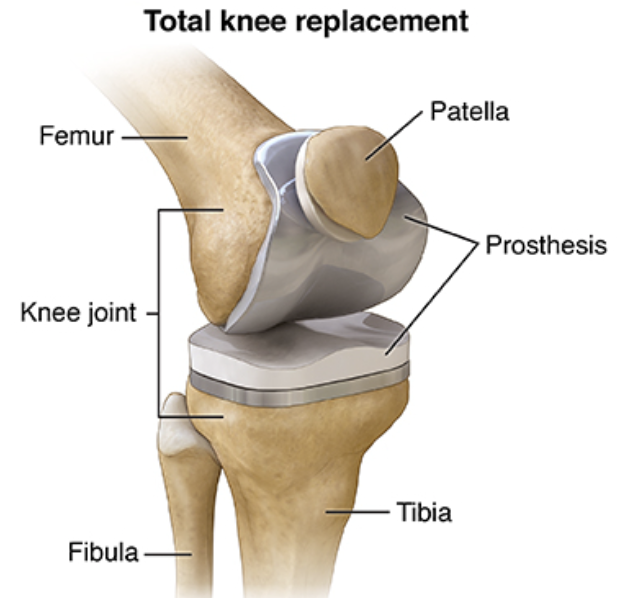
What Does Physiotherapy After Knee Replacement Look Like?
Rehabilitation often progresses through several stages.
These stages overlap, and you may progress faster in some areas than others. Your physiotherapist will usually adjust exercises according to how your knee responds rather than simply moving you forward because a certain number of weeks have passed.
Phase 1: The First 2 Weeks After Knee Replacement
During the first couple of weeks, the main priorities are usually protecting the surgical knee, managing pain and swelling, beginning safe movement, and becoming more independent with everyday activities.
You may initially use a walker, crutches, or another walking aid. Your healthcare team will advise you how much weight you can safely place through the operated leg and when you can progress away from the walking aid.
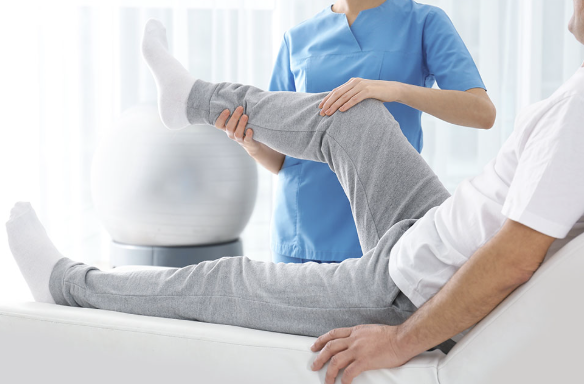
Physiotherapy during this stage may include gentle knee bending and straightening exercises, exercises to activate the quadriceps muscles at the front of the thigh, ankle movements, walking practice, and advice about safely moving around your home.
The goal is not to push the knee as hard as possible.
Instead, the goal is to begin moving safely while allowing the tissues to heal.
Some swelling, stiffness, and discomfort are expected early in recovery. Your physiotherapist can help you understand what is normal for your stage of recovery and when symptoms may need further medical attention.
Phase 2: Early Rehabilitation — Approximately Weeks 2 to 6
As healing progresses, physiotherapy usually begins to focus more on improving movement, strength, walking, and everyday function.
Exercises may gradually become more challenging.
For example, your program may include movements such as supported squats, sit-to-stand exercises, step exercises, leg strengthening, balance activities, and continued work on bending and straightening the knee.
Walking is also an important part of recovery.
Rather than simply trying to walk farther every day, your physiotherapist may look at how you are walking.
Are you limping?
Are you relying heavily on your walking aid?
Are you avoiding putting weight through the operated leg?
Are you taking very short steps?
Improving walking quality is often just as important as increasing walking distance.
There is no universal distance that everyone should be walking one, two, or four weeks after surgery. Your surgeon’s recommendations, previous activity level, strength, swelling, pain, and overall recovery should guide progression.
Phase 3: Building Strength and Function — Approximately Weeks 6 to 12
By this stage, many people begin focusing more heavily on strength and functional activities.
This may include exercises for the quadriceps, hamstrings, hips, calves, and other muscles that support walking and movement.
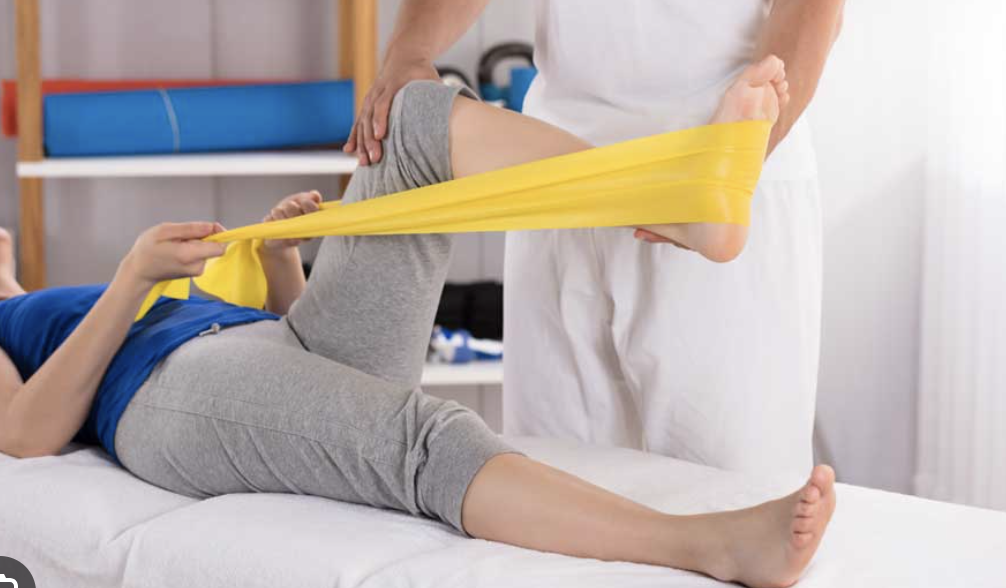
Your physiotherapy program may also include activities such as stair climbing, repeated sit-to-stand movements, walking on different surfaces, balance exercises, stationary cycling, and progressively more challenging strengthening exercises.
The goal is not simply to make the knee stronger in the clinic.
The goal is to make everyday activities easier.
For one person, that may mean comfortably climbing stairs.
For another, it may mean walking around the grocery store without needing frequent breaks.
Someone else may want to return to gardening, golf, cycling, travelling, or playing with grandchildren.
Your rehabilitation should reflect the activities that matter to you.
Phase 4: Returning to More Demanding Activities — Around 3 to 6 Months and Beyond
Knee replacement recovery does not necessarily end after 12 weeks.
For many people, strength, endurance, confidence, balance, and comfort continue improving for several months.
Current patient guidance notes that full recovery after knee replacement can take several months or longer, and the timeline varies from person to person.
At this stage, physiotherapy may focus on more advanced strengthening, longer walks, balance challenges, recreational activities, and tasks related to work or hobbies.
The appropriate activities will depend on your goals and the recommendations of your surgeon.
Low-impact activities such as walking, cycling, swimming, and certain recreational activities may be appropriate for many people after recovery, but you should discuss higher-impact activities with your surgeon and physiotherapist before returning to them.
How Long Does It Take to Recover From Total Knee Replacement?
There is no single knee replacement recovery timeline.
Some people progress quickly during the first several weeks but need more time to regain strength.
Others regain strength relatively well but continue dealing with stiffness or swelling.
Your recovery can be affected by factors such as your health before surgery, strength before surgery, how long you had knee problems before the operation, other joint or back problems, surgical factors, complications, and how consistently you are able to work on your rehabilitation.
Instead of comparing your recovery with someone else’s, it is usually more helpful to look at your own progress over time.
For example:
Can you bend or straighten the knee more comfortably?
Can you get out of a chair more easily?
Are you relying less on your walking aid?
Can you walk farther or with less of a limp?
Are stairs becoming easier?
Is your strength improving?
These functional changes can provide a much more useful picture of recovery than trying to reach a particular milestone by an exact date.
How Many Physiotherapy Sessions Will I Need After Knee Replacement?
There is no standard number that applies to everyone.
Someone who was active and strong before surgery and is progressing smoothly may need less guidance than someone experiencing significant weakness, stiffness, balance problems, or difficulty walking.
Your physiotherapist should regularly reassess your progress and adjust the frequency of appointments.
As you improve, more of your rehabilitation may happen independently through your home exercise program, with physiotherapy appointments used to reassess your knee, progress exercises, and address problems that are slowing your recovery.
Common Challenges During Knee Replacement Recovery
Knee Stiffness
Difficulty bending or fully straightening the knee is common after surgery.
Your physiotherapist may use movement exercises, strengthening, activity advice, and other treatment strategies to gradually improve mobility.
Muscle Weakness
The quadriceps and other muscles around the hip and knee can lose strength after surgery.
Progressive strengthening is an important part of rebuilding your ability to walk, use stairs, stand from a chair, and return to daily activities.
Swelling
Swelling can continue for some time after knee replacement and may fluctuate depending on how active you have been.
Your healthcare team may recommend strategies such as appropriate movement, elevation, and other swelling-management techniques based on your individual situation.
Difficulty Walking Normally
Pain, weakness, stiffness, swelling, and months or years of compensating for an arthritic knee can all affect the way you walk.
Gait training can help you gradually develop a more comfortable and efficient walking pattern.
Balance and Confidence
Some people remain cautious about loading the new knee, using stairs, walking outside, or returning to activities they have avoided for a long time.
Balance exercises and gradual exposure to increasingly challenging activities can help rebuild confidence.

Does Physiotherapy Hurt After Knee Replacement?
Rehabilitation can sometimes be uncomfortable, especially when you are working on movement or rebuilding strength.
However, the goal should not be to simply push through severe pain.
Your physiotherapist can help adjust exercise intensity according to your symptoms and stage of healing.
Increasing pain, significant swelling, or symptoms that do not settle as expected may mean the activity needs to be modified or that the knee should be reassessed.
Communication is important. Tell your physiotherapist how the knee responds both during treatment and later that day or the following day.
Can Physiotherapy Help Before Knee Replacement Surgery?
If you know that knee replacement surgery is coming, there may also be value in discussing what you can do before surgery.
This is sometimes called pre-operative rehabilitation or “prehab.”
Depending on your situation, the focus may include maintaining leg strength, staying as active as comfortably possible, learning exercises that may be used after surgery, preparing your home, and understanding what the early recovery period may involve.
Preparing for recovery before surgery can also help you know what equipment, transportation, or assistance you may need when you return home.
When Should You Contact Your Surgeon or Healthcare Team?
Some discomfort, swelling, and stiffness are expected after knee replacement surgery, but certain symptoms deserve medical attention.
Contact your surgeon or healthcare provider promptly if you are concerned about symptoms such as increasing redness or wound drainage, fever, worsening rather than improving swelling or pain, significant calf pain or swelling, or an unexpected decline in your ability to move the leg.
Seek urgent medical care for symptoms such as chest pain or difficulty breathing, particularly if accompanied by leg pain or swelling, because these can be signs of a serious complication such as a blood clot.
If you are unsure whether a symptom is part of normal recovery, it is better to contact your healthcare team than to guess.
What Makes a Successful Knee Replacement Rehabilitation Program?
A successful program is not about doing the largest number of exercises possible.
It is about doing the right exercises at the right stage, progressing them when your knee is ready, and connecting those exercises to the activities you want to regain.
Consistency matters, but so does adjustment.
Your rehabilitation program should change as your knee changes.
Exercises that were appropriate two weeks after surgery may no longer challenge you two months later. Similarly, an exercise that works well for someone else may not be the right choice for you.
That is one reason individualized physiotherapy can be valuable throughout knee replacement recovery.
Physiotherapy After Knee Replacement in Alliston and Tottenham
At South Simcoe Physiotherapy, our physiotherapists provide one-on-one physiotherapy treatment in Alliston and Tottenham.
If you are preparing for a total knee replacement or have already had surgery, your physiotherapist can assess your movement, strength, walking, balance, and current functional abilities and develop a rehabilitation plan based on your stage of recovery and personal goals.
Your rehabilitation does not need to look exactly like someone else’s.
The goal is to help you safely rebuild the movement, strength, and confidence needed for the activities that matter to you.
If you are preparing for knee replacement surgery or need help progressing after surgery, contact South Simcoe Physiotherapy to book an assessment in Alliston or Tottenham.