
Summary
If you’re living in the Simcoe County area—whether in Alliston, Tottenham or the surrounding community—and you’ve been dealing with persistent pain, you may be wondering: what exactly is acupuncture and how does it really work for pain relief? At South Simcoe Physiotherapy, we often integrate acupuncture with our physio services to support recovery, and it’s our goal to help you understand how this ancient practice meets modern physiotherapy in a way that’s safe, local and effective.
In this post, we’ll explore:
- What acupuncture is
- How it works
- How acupuncture needles may relieve pain
- How long does it typically take to see effects
- What conditions can be treated
- When you should avoid acupuncture
Let’s get started.
What is Acupuncture?
Acupuncture is a treatment rooted in traditional Chinese medicine (TCM) in which very thin, sterile needles are inserted into specific points of the body (acupoints) to stimulate healing and symptom relief. From a TCM perspective, the goal is to restore the balance of energy (often called “qi” or “chi”) flowing through meridians in the body.
In more modern clinical settings, we understand acupuncture as part of a complementary therapy; it is often used alongside physiotherapy, exercise, manual therapy and education rather than as a stand‑alone “fix.”
At our Alliston and Tottenham clinics, we view acupuncture as one of several tools in your pain‑relief toolbox, not a replacement for movement, posture correction or functional rehabilitation, but a helpful adjunct.

How Does Acupuncture Work?
The mechanism by which acupuncture supports pain relief is still being studied, and both TCM and Western frameworks help to understand it.
Traditional view
According to TCM, acupuncture works by inserting needles at acupoints to unblock or balance the flow of qi through the meridians. When energy is stuck or unbalanced, pain or dysfunction may arise; acupuncture is believed to restore harmony.
Scientific/physiological view
From a Western biomedical perspective:
- Many acupuncture points lie near nerves. When stimulated, these nerves send signals to the spinal cord and brain.
- These signals can trigger the release of natural pain‑relieving chemicals, such as endorphins.
- Acupuncture may also influence local blood flow, reduce inflammation and calm over‑excited nerves that contribute to pain.
In short: by the insertion and manipulation of fine needles at specific points, acupuncture initiates a cascade of neurochemical and circulatory responses that can reduce pain signals and promote tissue recovery.
How Do Acupuncture Needles Work to Relieve Pain?
When you come in for a session at our Alliston or Tottenham clinic, here’s roughly what happens and how the needles function:
- The physiotherapist trained in acupuncture selects acupoints based on your condition (for example, low back pain, shoulder discomfort, nerve irritation).
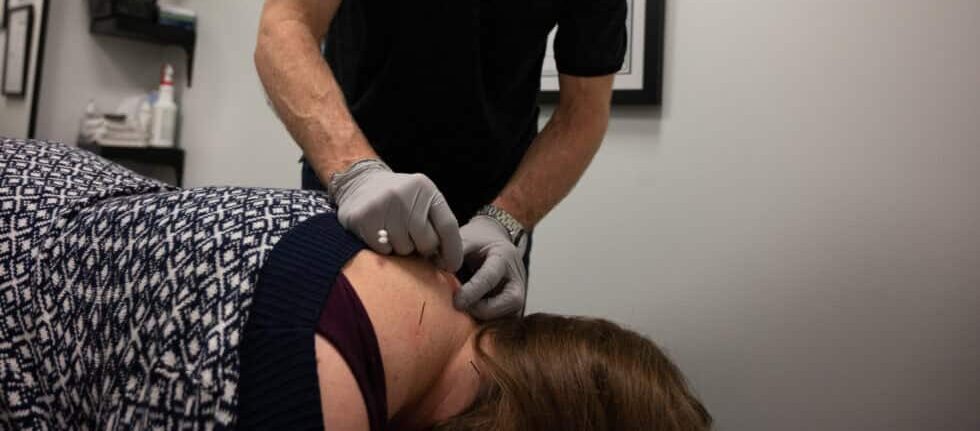
- Very thin sterile needles (much thinner than typical medical needles) are inserted through the skin into the acupoints. Most people feel little to no discomfort on insertion.
- Once inserted, the needles may be gently manipulated (twisted, turned), sometimes combined with heat or electrical stimulation (electro‑acupuncture) to enhance the effect.
- The needle stimulation triggers nerve fibres and signals to the central nervous system, prompting the release of endorphins and modulation of pain pathways.
- The local tissue and blood flow may respond: muscle tension can reduce, circulation may increase, and inflammation can quiet down. In turn, the experience of pain may lessen and mobility may improve.
This is why acupuncture is often used for musculoskeletal pain, nerve‑related pain and even as a complement to physiotherapy rehabilitation.
How Long Does It Take for Acupuncture to Work?
One of the common questions we get at our South Simcoe Physio clinics: “How long does acupuncture take to work?”
The answer depends on several factors: the type, severity and duration of your condition; how you respond to acupuncture; whether you are combining it with other therapies (like physio, exercise); and how consistent you are with your care plan.
- Some people experience relief after one session, especially for acute pain or when nerves or muscles are moderately irritated.
- For more persistent or chronic conditions, it may take several sessions (for example, weekly over 4‑6 weeks) before meaningful improvement is seen.
- Typically, an acupuncture session lasts between 20 to 30 minutes (including assessment, needle insertion and resting phase).
- After‑effects can include a sense of relaxation, mild soreness, or improved mobility in the hours or days following treatment.
At South Simcoe Physio Clinics, we will assess your progress, adjust the frequency of sessions and integrate acupuncture with your larger rehabilitation plan so you achieve meaningful results and not just temporary relief.
What Conditions Can Acupuncture Treat?
Acupuncture is versatile and can be applied to a range of conditions, especially those involving pain, muscle tension, nerve irritation and functional limitations. Some common examples include:
- Low back pain and sciatica
- Neck pain, shoulder pain (including rotator‑cuff issues)
- Knee pain, osteoarthritis pain
- Headaches and migraines
- Nerve pain (for example, from neuropathy)
In the context of a physiotherapy clinic like ours in Alliston and Tottenham, acupuncture is often part of a wider solution: we couple it with exercise, manual therapy, education and functional rehab so you not only feel better, but move better, reduce risk of recurrence and return to your life.
When Should You Avoid Acupuncture?
While acupuncture is generally safe when performed by qualified professionals using sterile single‑use needles, there are circumstances when it may not be appropriate or require caution:
- If you have a bleeding disorder or are on blood‑thinning medication, insertion of needles might increase the risk of bleeding.
- If you have an infection at the site where needles would be inserted (skin lesion, open wound) you should avoid it until it is resolved.
- If you have a pacemaker and the practitioner intends to use electro‑acupuncture near the device.
- If you are extremely needle‑averse or fearful of the process, talk through your concerns first.
- As well, acupuncture should not replace medical management of serious conditions (such as unstable spine, active infection, uncontrolled cancer); rather, it should be integrated into the plan under physician oversight.
At South Simcoe Physio, we will review your full medical background, ask about medications and verify suitability for acupuncture before proceeding; your safety is our priority.
Ready to Try Acupuncture for Pain Relief in Alliston or Tottenham?
Acupuncture offers a scientifically supported, patient‑centred approach to pain relief that complements physiotherapy beautifully. In Alliston and Tottenham,, at South Simcoe Physio our goal is to help you move from pain and limitation to freedom and function.
Whether you’re dealing with a flare‑up of muscle tension, persistent nerve irritation, or simply want a non‑drug option to support your recovery, acupuncture may be a valuable addition to your treatment plan.
Ready to explore how acupuncture treatment can help you? Book your consultation at our Alliston or Tottenham clinic today and let us tailor a plan that prioritizes your comfort, recovery and long‑term mobility. Contact South Simcoe Physio now.