
We left off talking about my incredible experience running in the Swiss Alps and being able to complete the Eiger Ultra which is part of the UTMB series of worldwide races. Unfortunately for me, my return home was not quite as smooth as what my experience in the Alps was.
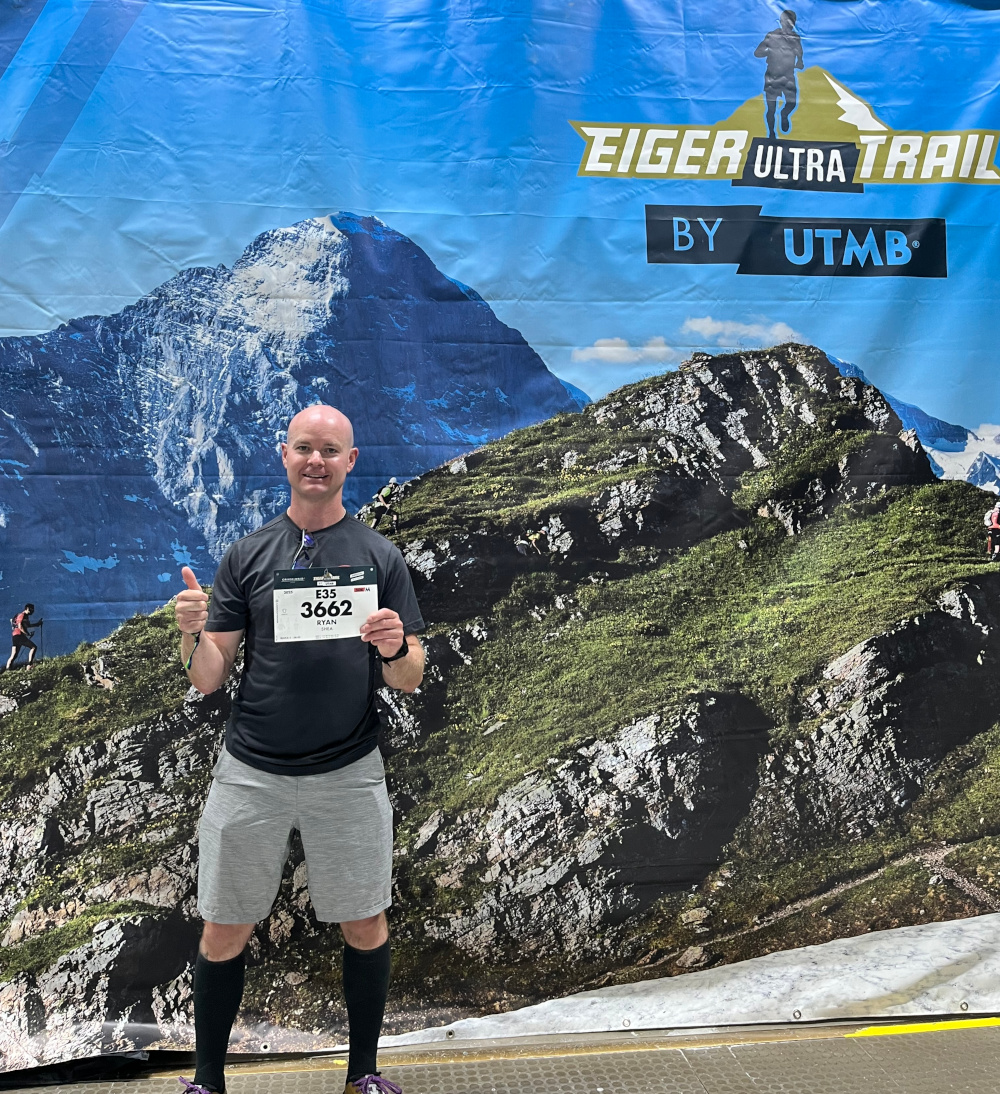 I returned home from Switzerland on a Monday and had exactly 12 weeks until my next scheduled big event which was a marathon in Quebec called the P’tit Train du Nord. 12 weeks isn’t a lot of time to get marathon-ready, though since I was already in good shape, it was reasonable. I did have some general bilateral knee soreness after my race, that persisted into restarting my training, though I would have described it as patellofemoral pain likely as a result of the downhill portions of my run. Generally, I felt quite good after my trail race, not experiencing the typical left hip pain that I feel during and after running a road marathon.
As a result of how I was feeling, my coach and I decided to get right back into the push for the marathon. By Thursday I had a hard “speed session” scheduled in, and was able to perform it quite well. I did notice a higher than usual level of fatigue the next day, but didn’t pay too much attention to that. I had another long run that Sunday which I was able to do without concern (other than some continued general knee soreness), so everything was looking good. Then, about 2 weeks after returning home from Switzerland, I started to feel some left knee pain which was a bit more specific. Right away I identified it as “pes anserine bursitis” and “distal semitendinosus tendonopathy”.
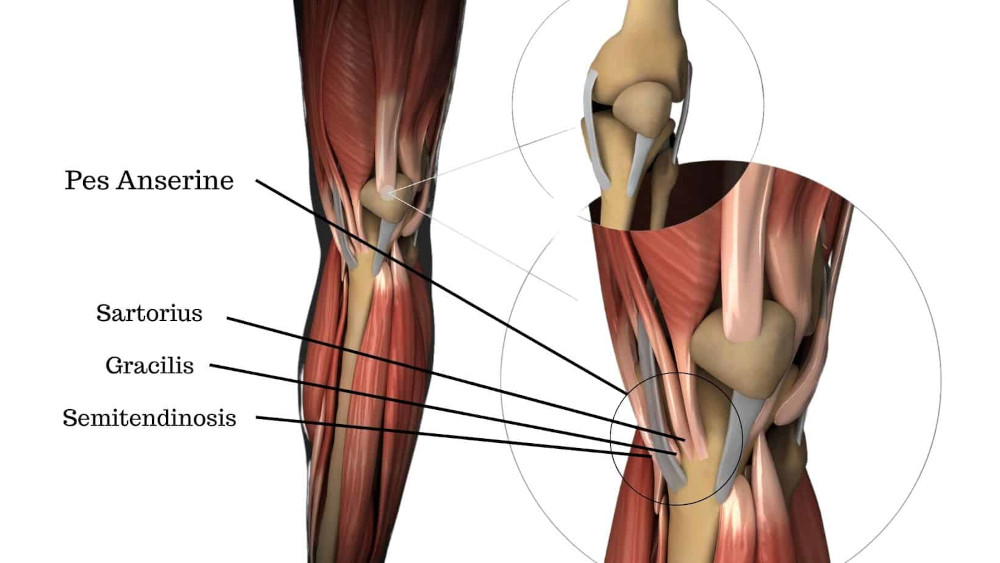 The pes anserine bursa is a fluid filled sack which is meant to reduce friction between the tibia (or shin bone) and 3 tendons that come down the leg and attach on the tibia called the semitendinosus, gracilis and sartorius. This bursa can become inflamed typically from being compressed by the tendons due to tightness for instance in them. In my case, I am suspicious that the tendon originally became strained and the bursa compressed while running the Eiger Ultra and potentially “over-striding” while running down the mountain sides. Although I didn’t notice anything specific immediately after the race (aside from some general bilateral knee stiffness), often with running related injuries it is something that has changed in the past 4 weeks or so.
Despite my better judgement, with only 12 weeks left to prepare for the P’tit Train du Nord Marathon, I decided to continue pushing through the knee discomfort. This pushing included adding a second run a day (a short 4-5km session that I performed mainly at Earl Rowe Park) about 3 days per week. On most runs I would have some significant stiffness with my first several steps, but then this would settle and I would be able to typically run pain free throughout (with a couple of exceptions to this). I did notice a potential worsening of symptoms in the middle of August, so instead of an outdoor session I started running in the pool for my second session of the day.
 Then, towards the latter half of August, I had a short 10km run where the pain was constant (and I likely shouldn’t have finished the session). The timing seemed good as I was headed away on a fishing trip for a few days and running in the remote area that we stay can be tricky at the best of times. I decided to take those few days off of running, and just went for long walks instead. When I returned home, I decided to try another 16km run. I made it another 10km before deciding that it would be best if I walked the rest of the way home. That day the pain persisted and worsened throughout the day to the point where I had a significant limp while at work. I called in a favour and was able to get in to see a sports medicine physician the next morning in Collingwood.
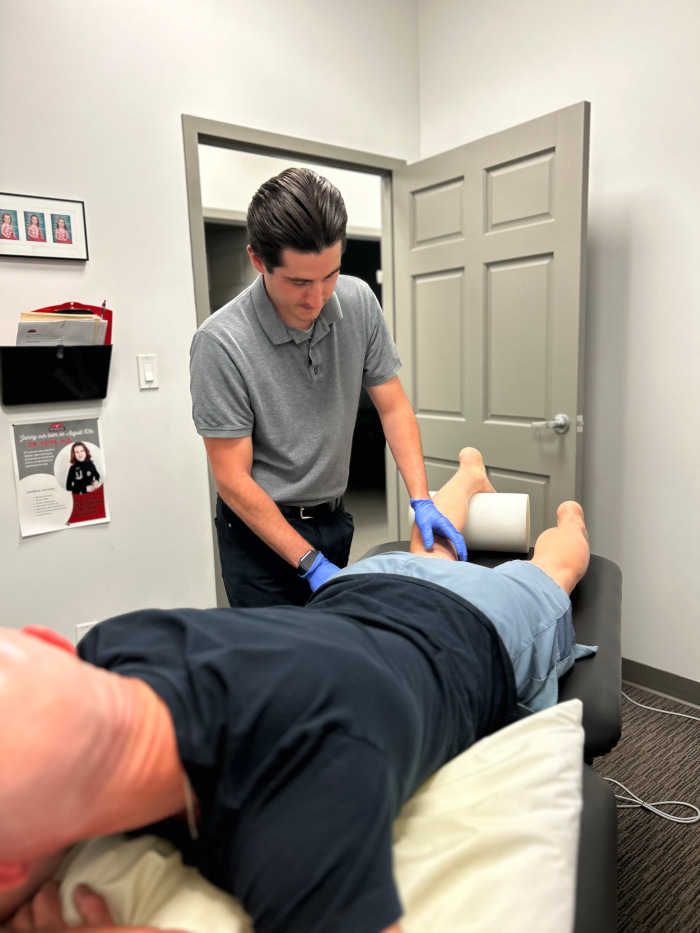
Still experiencing significant pain, I limped into the appointment and discussed with the doctor what my suspicions were. He agreed with my diagnosis after doing his own testing and confirmed that the bursa was over 8x the typical size when he performed an ultrasound on it. His recommendation was a cortisone injection into the bursa which he felt would help greatly and may still give me an opportunity to complete my marathon (after 7-10 days with no running). Though I am not typically a supporter of cortisone due to the negative effects that it can have on both bone and soft tissue in the surrounding area, I was desperate to complete the upcoming marathon so I agreed.
The cortisone injection did help to relieve some pain immediately (that is from the anaesthetic that is in it) and then started to help a bit more from 24hrs on. The effects of cortisone can last for weeks, so I remained hopeful that this was going to allow me to complete my training and finish my marathon (though my time goals, I was beginning to think, were likely not going to be met). By about day 4 after cortisone, I had much less of a limp, though any contraction of my hamstring (such as pulling my shoes off using the heel) resulted in quite significant pain. Despite it being out of character for me, I knew that I was not able to run 7 days after injection and in fact I waited until day 11 (while cycling about 40-50km per day without experiencing pain).
 On day 11 I started with a gentle cycle to warm up and then I had planned to try to get about 30 minutes of easy jogging in on the treadmill. My knee simply didn’t feel “right” when jogging on the treadmill, so after 10mins I decided to stop and finish the rest of the workout on the bike. It was then that I knew that I wouldn’t be able to complete my marathon. There simply was not enough time left to be able to safely complete the marathon training and have a reasonable chance of not further injuring myself on race day. It was only a few days prior to this that I had said that I would complete the marathon even if it meant crawling over the finish line and despite knowing that my likelihood of further injury was high. After some careful reflection, I came to the realization that running healthy and regularly was more important to me than one race, so if running this race was going to dramatically increase my injury risk, it wasn’t worth the several months off that I was likely going to need in order to recover. The hardest part was telling my support crew (in this case my parents and my sister) that I wouldn’t be running.
With the P’tit Train du Nord Marathon no longer a goal, the goal now became a successful return to running (no matter how long that took). I continued my now daily regime of using the Breg Polar Care Wave ice and compression unit, taking Circumin for inflammation and using my topical diclofenac from Johnny Wong at Millpond Pharmacy. In addition, I also stretched my hamstrings regularly and continued my workouts at Thrive, as well as my 40-50 km daily on the exercise bike. Interestingly, we were cautious with what we were doing at the gym initially, but I could seemingly do just about anything at the gym except run and any strong (or even not so strong) hamstring contraction. I spent an additional 2 weeks after my “test run” post cortisone without running. I then very gradually started to reintroduce running using a walk run program to tolerance beginning with 5 cycles of 1 minute jog and 3 minute walks. I spent a couple of weeks gradually increasing this and eventually was to the point where I was running up to 6km continuously. My conditioning certainly wasn’t a limiting factor, and I did not have extreme pain, but I was both trying to be cautious in building up my tissue tolerance, and I would say that something still didn’t feel quite right.
The day after the Sunday that I had been scheduled to run the P’Tit Train du Nord, I had a CT scan on my knee that the orthopaedic surgeon at Peak to Shore Physiotherapy had booked for me to rule out a stress fracture in my knee. I was so certain (call it denial if you wish!) that I didn’t have a stress fracture, that I had already begun running again and the thought of cancelling the CT scan had even crossed my mind (though I never seriously considered it). I had the CT scan nonetheless, and then woke up the next day and resumed running. Then, Tuesday afternoon I received a text with news that I didn’t want to hear; I had a stress fracture of the posterior medial tibial plateau. Part of me was shocked, and perhaps part of me was suspicious of this all along, but unwilling to accept it. I spoke to the orthopaedic surgeon who said that I needed to be non-weight bearing (ie. crutches) for the next 2 weeks and then would gradually reintroduce activity. I would not be permitted to run for the next 8-12 weeks in order to allow the fracture to heal.