
Shoulder pain is one of the most common complaints seen in physiotherapy clinics, and rotator cuff injuries are often at the heart of the issue. Whether caused by sports, repetitive overhead work, or age-related degeneration, rotator cuff tears can significantly limit daily function and quality of life.
PATIENT PROFILE
- Age: 52
- Occupation: Carpenter
- Injury Type: Partial-thickness supraspinatus tendon tear
- Symptoms:
-
- Persistent shoulder pain, especially at night
- Difficulty lifting objects above shoulder height
- Pain during overhead and reaching movements
This individual injured his right shoulder while lifting a heavy beam overhead at work. The pain was immediate and sharp, followed by ongoing weakness and discomfort that gradually worsened over several weeks.

ASSESSMENT FINDINGS
During the initial physiotherapy assessment, several key deficits were identified:
Observation & Posture:
- Rounded shoulders, forward head posture
- Mild scapular winging during arm elevation
Range of Motion (ROM):
- Active shoulder abduction: Limited to 90° due to pain
- External rotation: Painful and restricted
- Passive ROM: Less limited, suggesting muscle/tendon involvement rather than joint stiffness
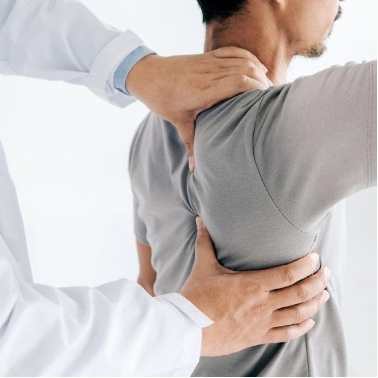
Strength Testing:
- Weakness in external rotation and abduction
- Positive “Empty Can” and “Drop Arm” tests
Pain Report:
- VAS (Visual Analog Scale): 6/10 at rest, 8/10 during movement
- Sleep disturbed due to pain when lying on the affected side
TREATMENT GOALS
The treatment plan focused on the following objectives:
- Reduce pain and inflammation
- Restore full range of motion
- Strengthen the rotator cuff and scapular stabilizers
- Improve posture and functional capacity
- Educate the patient on activity modification and injury prevention
REHAB PHASES & INTERVENTION
Phase 1 (Weeks 1–3): Pain Management & Early Mobility
- Interventions:
-
- Ice therapy and gentle pulsed TENS for pain relief
- Manual therapy: soft tissue release to upper traps and posterior shoulder
- Pendulum exercises and assisted range of motion
- Education: activity modification, posture correction, sleep positioning
- Outcome:
Pain reduced from 6/10 to 3/10. Able to elevate the arm to 120° actively.
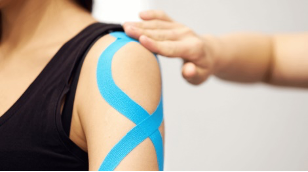
Phase 2 (Weeks 4–6): Strengthening & Motor Control
- Interventions:
-
- Isometric exercises for rotator cuff muscles (pain-free range)
- Scapular control: wall slides, scapular retraction drills
- Theraband resisted external and internal rotation
- Core activation and thoracic spine mobility drills
- Outcome:
Improved strength and control. No longer experiencing sharp pain with overhead activity. Abduction range increased to 150°.
Phase 3 (Weeks 7–10): Functional Training & Return to Work
- Interventions:
-
- Progressive resistance training using dumbbells
- Plyometric and proprioceptive drills (e.g. ball toss against wall)
- Simulated work tasks with ergonomic coaching
- Education on lifting mechanics and warm-up routines
- Outcome:
Full ROM restored. Strength nearly symmetrical with the opposite side. Patient cleared to return to modified duties at work.
FINAL RESULTS
At the end of the 10-week program:
- Pain Level: 1/10 (occasional ache after heavy lifting)
- ROM: Full, pain-free in all directions
- Strength: 90–95% of the unaffected side
- Function: Returned to full-time carpentry with minor task modification
- Patient Feedback: “I didn’t think I’d be able to lift my arm again, let alone get back to work. Physio made all the difference.”
KEY TAKEAWAYS
- Early intervention matters: Client began physiotherapy within 2 weeks of injury, which helped reduce secondary complications like joint stiffness and compensation patterns.
- Exercise is medicine: A progressive, individualized exercise program helped rebuild strength and confidence.
- Manual therapy complements exercise: Especially useful in reducing guarding and restoring mobility early on.
- Education is powerful: Teaching the client about his condition and safe movement helped him take charge of his recovery.
Could You Be Experiencing a Rotator Cuff Injury?
If you’re struggling with persistent shoulder pain, weakness, or limited motion—especially with overhead activities—you may be dealing with a rotator cuff issue. Physiotherapy offers a non-surgical, evidence-based pathway to recovery. Call our clinic today to book an appointment and Get Better. Faster.