
Leading up to the long awaited day that I was allowed to start running, I was met with emotions of both genuine excitement, and some level of anxiety. In the 6 years that I have been running, this is by far the most significant injury that I have experienced and knowing that the re-injury rates are very high, made me even more nervous. The last thing that anyone wants to do once they finally start feeling better, is to re-injure themselves and feel as though they have to start all over.
I mapped out my own “return to run” very cautiously and deliberately in order to give myself the best chance to return successfully. Day 1 was Tuesday December 2nd. On this day (and the next day) I would start with a 10 minute walk, then I would have 5 cycles of 1 minute of jogging broken up by 4 minutes of walking, and finally finish with an additional 10 minutes of walking. The goal of “return to run” when coming back from a stress fracture is to be pain free, though this can be a hard concept to grasp for some of us! I had some “sensations” in the general area of my injury, though I am not certain that I would call it pain. The next morning upon awakening, I would say that there was a slight discomfort in the knee region as well. These sensations, although made me nervous, were not yet enough to force me to shut down my return from injury.
For the first 2 weeks, my plan was to run Tuesday, Thursday, and Saturday while cycling on the off days and progressing my strength workouts on Mondays and Fridays. Once again, my knee didn’t seem to bother me at all when working out at the gym (save for one day where a side plank exercise seemed to cause me some grief), but we remained cautious while progressing the weights and introducing single leg exercises. The runs would gradually increase jog time by 1 minute (every second run), while they would reduce walk time by 1 minute as well. If all went according to plan, I would be doing some “straight running” (ie. no walk breaks) by the third week. It is important to note that the purpose of the walk breaks were not as a result of “being out of shape” or at least not in the traditional sense, they are actually in there to give the bone a rest instead. Bones, like almost any other living tissue, can fatigue when they are being worked, so these walking breaks give the bone some time to rest and heal during the activity. The goal with this program is to gradually rebuild the resilience in the bone and the supporting soft tissues, without overburdening those systems and resulting in a reaggravation of a bone stress injury.

As I moved into the third week of my “return to run”, the runs started to become more satisfying. Running for 4 minutes and only walking for 1 minute felt a little bit more like I used to run. This year, I didn’t feel the need to complain at all about running in sub-zero temperatures seemingly with fresh snow on the ground each day (it’s amazing what you miss when it’s taken away from you!). My gym sessions also started to become more typical. Increasing the lower body demands by lifting heavier weights, in addition to doing some single leg exercises, while again progressing slowly in order to allow the bones to heal. In some cases it can take up to 12 months for the bones to reach their pre-injury strength so it has become clear to me that this is something that I am going to have to monitor for quite some time going forward.
Before, after, and during each run I am constantly monitoring the pain in the fracture site region. What makes the situation even less clear is the fact that I also had significant soft tissue damage (the bursa for certain and given the location of injury there is also some concern for the meniscus). To say that I was pain free throughout my recovery would be a lie. I did have some discomfort and was constantly wondering whether or not I should be “shutting it down”. To prove that this time around I am going to pay better attention to the signals that my body is sending me, I even delayed a run by an extra day one day when it was feeling just a little bit off. All of this is to say that even though I live and breathe this on a daily basis, recovery is never truly linear, no matter how hard we try. There is a little bit of improvisation that takes place, no matter how well a recovery plan is constructed, you will likely have to vary from that plan from time to time.
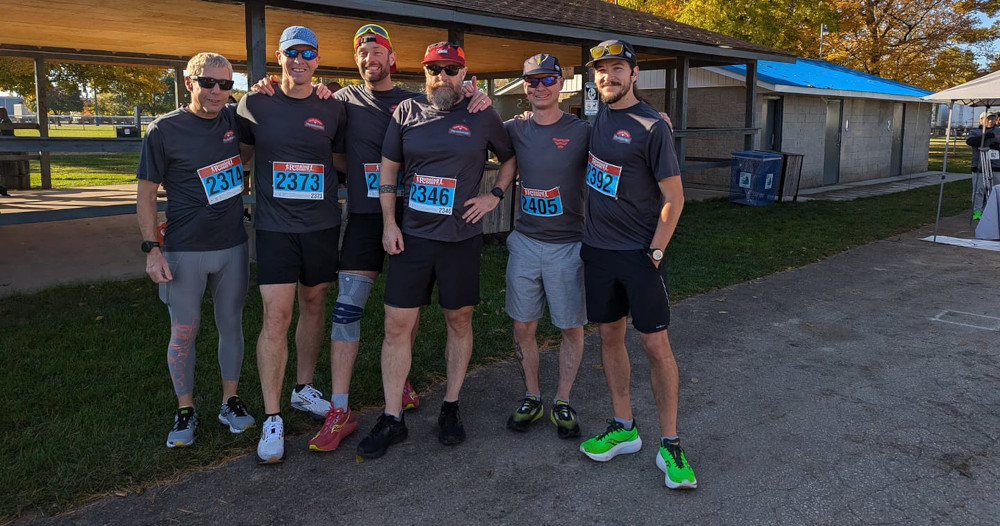
By week 4,I had started running consecutively (without walking breaks). I was surprisingly (or not) out of shape, and now a 5k run seemed pretty close to long enough! I certainly wasn’t out of breath by the time I completed these distances, but it didn’t feel as easy as it did pre-injury. While I continued to increase my distance over the coming weeks, I did not increase the number of days running per week above 4. I still had some soreness in the inside aspect of the knee, though it was not consistent enough for me to put the brakes on my “return to run”. I did consider “shutting it down” again and again, but remained hopeful that the pain that I was experiencing was a normal part of this process and not a reaggravation of the bone stress injury. Shortly after Christmas, on my second run with the running group I had started a couple of years ago, I ran 10k. The knee felt great the entire time, and I did not notice any increased soreness thereafter. My fingers were crossed that this was a turning point in my recovery!
During my time off, I reflected a great deal on what my needs were as far as coaching for the upcoming season. I had a great experience with my previous coach from Mile2Marathon, though obviously the last training cycle did not go as either of us had planned. In speaking with Lauren, my business partner with the Real Running Course, and with a couple of other trusted friends and colleagues, I decided that perhaps I didn’t require the one on one coaching that I was previously receiving as motivation is certainly not a concern. If anything, I am perhaps more likely to overdo it with this type of coaching, so perhaps a more “hands off” approach to coaching better suits me at this stage. That, and the fact that my current goal race is the UTMB ultramarathon in Tremblant this coming August, inspired me to call local coach and experienced ultramarathoner Sean Sharp from North of 89. I had a great conversation with Sean about creating a training plan for me once I had taken myself through the majority of the recovery process. Sean’s coaching style seemed like a great fit for me and working with a local coach would be a nice change as well.

The plan was to start my formal training for the Toronto Marathon (I am planning on running the ½ marathon in this case) at the end of January or the beginning of February. It would be then that I start following a more formal plan with the typical training elements of a long run, a tempo run, a medium long run and more.
Until then, I am just building “base mileage” trying to get my legs back underneath me. Although the knee was moderately bothersome at times, I was fairly certain that a lot of the discomfort I was experiencing was due to the soft tissue injuries that I sustained in addition to the stress fracture. As such, with non-bias input from both Lauren and Glenn (two extremely knowledgeable physio friends), I was able to cautiously continue my base build.
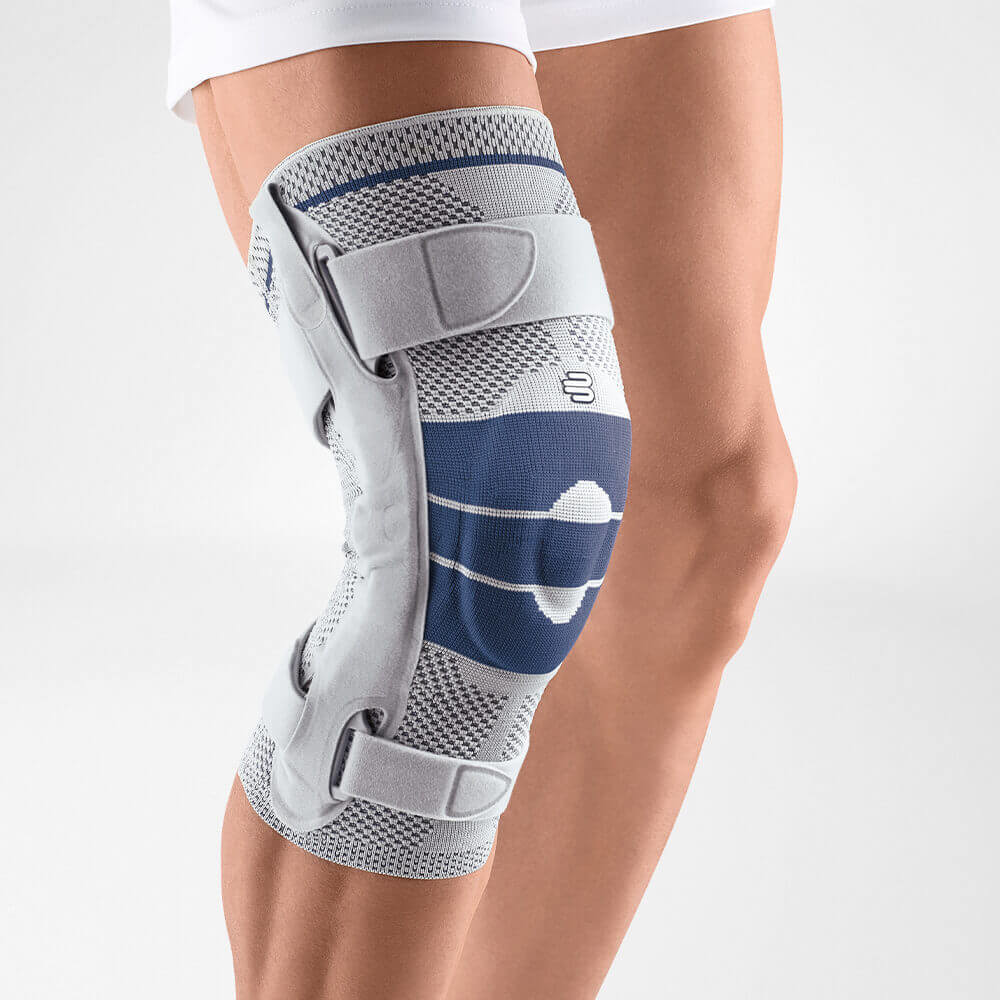
By mid-January I was up to about 50km per week over 4 days, and was ready to add in a 5th day of running (albeit a shorter run as this would be my first experience with running 3 consecutive days). My knee had started to feel closer to normal, no longer painful when doing stairs or hopping, and many of the “tweaks” that I would get with twisting seemed to be dissipating. I no longer felt the need to ice my knee after every run, and had stopped wearing my Bauerfeind Genutrain on a daily basis. During the Christmas break, while away on a family vacation, I even felt good enough to run 10-12km a few times on the beach and felt pretty good with it (though the heat was certainly a challenge). In the weeks leading up to the start of my formal training plan I started to sprinkle in some “strides” (think 100m sprints) as my first dose of speed work and bought my first pair of new running shoes in what seemed like an eternity from the Runner’s Den in Hamilton while I was back teaching at McMaster University.
In trying to keep with my “new me” I was very reasonable week to week and if I had something that prevented me from being able to run one day (such as ice fishing with my daughter), I didn’t try to “make up” for the missed run by adding mileage or doubling up one day. The risk of re-injury is still great, so a cautious approach is the best approach at this time.
Although my heart rate at a given pace has certainly increased (meaning that I’m working harder to maintain my previous paces), I am still feeling ready to start my ½ marathon training plan and start to build towards my ultra marathon. I can’t wait to see what coach Sean has in store for me!